



Comparing Ductless Mini-Splits vs Window Units for Historic Sherman Hill Homes
How Do You Cool a Historic Home Without Compromising Its Character?
When comparing ductless mini-splits vs window units for historic Sherman Hill homes, the most critical challenge is finding a way to keep your living space comfortable as peak July summer temperatures rise without destroying your property's unique character. If you live in a historic property, you already know that cooling your living space requires a delicate balancing act. You need relief from the sweltering weather, but installing traditional forced-air ductwork is often impossible, prohibitively invasive, or strictly forbidden by preservation guidelines. As we approach peak summer heat, the urgency to find a reliable cooling method becomes a daily concern.
At Midwest Comfort Heating & Cooling, our team frequently sees homeowners relying on traditional window air conditioners to survive the hottest months. However, in our years of servicing Des Moines' oldest neighborhoods, modern ductless mini-split systems have emerged as a powerful alternative for older properties. In this guide, we will provide a comprehensive, side-by-side comparison of aesthetics, security, and performance between these two non-ducted options. Whether you are looking for temporary relief or permanent air conditioning solutions, understanding how these systems interact with your home's unique architecture will help you make an informed upgrade before the worst of the summer heatwaves strike.
The Architectural Challenges of Sherman Hill Properties
The problem: Historic neighborhoods like Sherman Hill boast incredible architectural details that you simply cannot find in modern construction. From intricate original woodwork and thick baseboards to classic radiator heating systems, these properties are built with character. However, as our installation crews know all too well, that same character makes modernizing their comfort systems incredibly difficult.
The cause: Traditional central air conditioning relies on a massive network of bulky metal ductwork hidden behind drywall and drop ceilings. Historic homes were built long before central air conditioning existed. They feature solid lath and plaster walls, narrow wall cavities, and framing techniques that leave no room for large air ducts. Trying to force a traditional system into these spaces often requires tearing down original ceilings, building ugly bulkheads, or cutting through structural floor joists.
The solution: Because routing ducts is usually a non-starter, homeowners must look to systems that deliver cool air directly into the room. This brings the conversation to window units and ductless mini-splits. Both options bypass the need for ductwork, but they interact with your home's fragile structure in very different ways. If you are considering a ductless mini-split and heat pump installation, it is crucial to understand how it preserves your home's bones compared to a heavy window appliance.
Navigating Lath, Plaster, and Original Woodwork
Working with historic building materials requires extreme care. Lath and plaster walls are notoriously fragile compared to modern drywall. The system relies on wet plaster pushed through horizontal wooden strips (the lath) to create "keys" that hold the wall together. Heavy vibrations can easily snap these keys, causing large sections of plaster to crack or detach entirely.
When you install a heavy window AC unit, you are placing a massive, vibrating appliance directly onto an original wooden window sill. Over time, the constant shaking of the compressor can damage fragile window frames, loosen old glazing putty, and cause surrounding plaster to crack. Furthermore, older double-hung windows were never designed to bear the concentrated weight of a modern air conditioner, leading to warped sashes and permanent damage to your home's historic woodwork.
Aesthetic Preservation: Protecting Your Home's Historic Charm
One of the primary reasons you buy a home in a historic district is the visual appeal. Protecting that historic charm is a top priority, and the cooling system you choose has a massive impact on both the interior and exterior appearance of your property. If you live in Sherman Hill, you likely have strict neighborhood preservation standards to consider when modifying your home's exterior.
Our team at Midwest Comfort Heating & Cooling specializes in performing non-invasive installations that respect the architectural integrity and strict guidelines of historic districts. We understand that adding cooling without ductwork must be done with an eye for design, ensuring that modern comfort does not ruin century-old aesthetics.
The Exterior Eyesore of Window Units
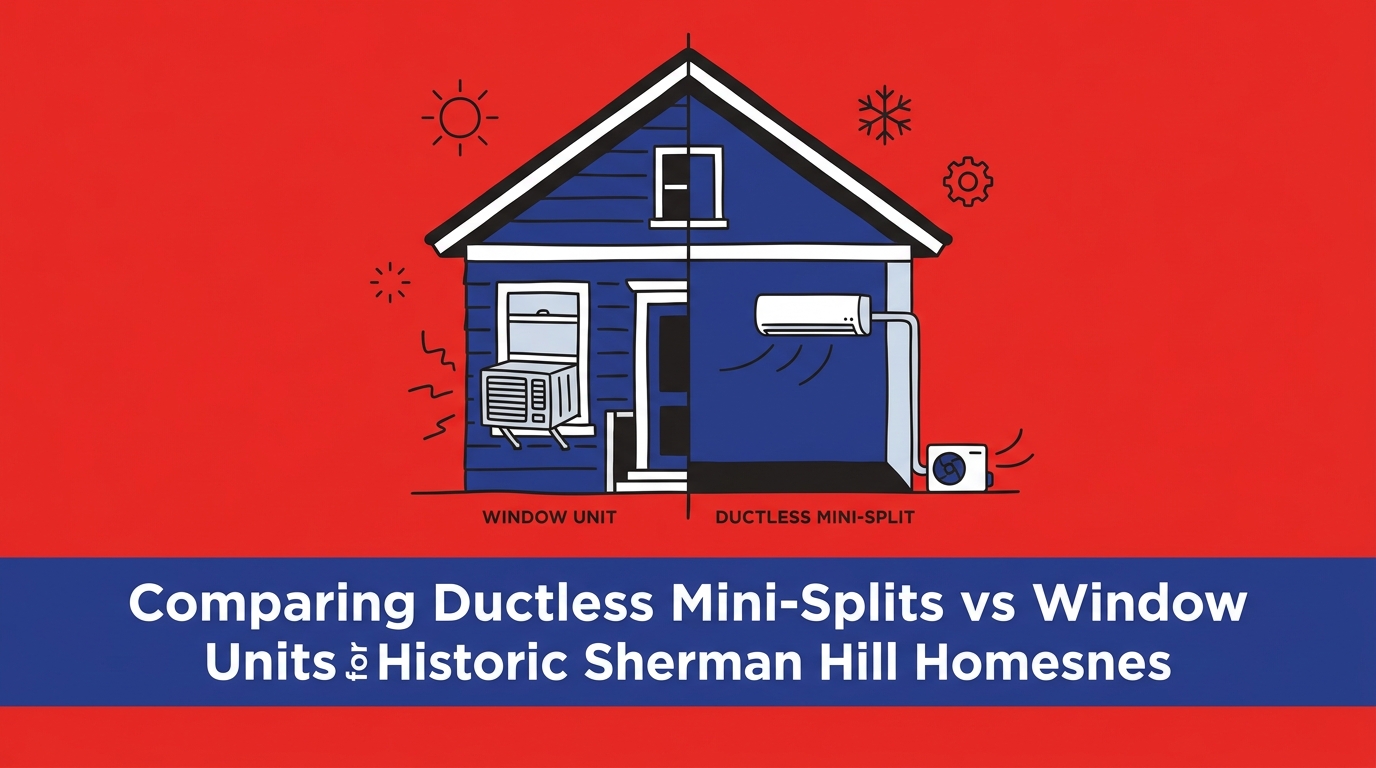
• Blocked historic windows: Window units obscure the classic lines and multi-pane designs of your original windows. From the street, a metal box hanging out of a beautiful Victorian or Craftsman facade instantly breaks the visual harmony of the property.
• Water damage and staining: Window units generate a significant amount of condensation. This water often drips directly onto your home's exterior paint, original wood siding, or masonry. Over time, this constant dripping causes paint to peel, wood to rot, and unsightly stains to form on the side of your house.
• Preservation violations: Many historic districts strictly prohibit or heavily regulate the use of window air conditioners on street-facing facades because they degrade the historical accuracy of the neighborhood.
Discreet Ductless Integration
• Minimal exterior footprint: Ductless mini-splits require only a small, three-inch hole through the wall to connect the indoor air handler to the outdoor compressor. Our expert installers routinely route these slim line sets inconspicuously along existing architectural lines or downspouts, minimizing visual interference.
• Flexible indoor placement: Unlike window units that dictate exactly where the cold air comes from, indoor mini-split heads offer incredible flexibility. They can be mounted high on walls near the ceiling, installed as floor-mounted units, or even recessed as ceiling cassettes to blend seamlessly with your historic decor and crown molding.
• Unobstructed natural light: Because the system does not sit inside the window frame, you get to keep your full view of the outdoors and allow maximum natural light into your historic living spaces.
Ground-Floor Security in Urban Neighborhoods
When evaluating cooling options for a historic urban neighborhood like Sherman Hill, security is a critical, yet frequently overlooked, factor. Ground-floor windows are already the most vulnerable entry points in any home. When you install a window air conditioner, you are actively compromising the physical security of your property.
To install a window unit, you must open the lower sash, place the unit on the sill, and pull down the flimsy accordion side panels to fill the gaps. This setup requires leaving the window permanently unlocked for the entire summer. Intruders know exactly how to exploit this vulnerability. A window unit can easily be pushed into the room from the outside, instantly providing a wide-open, unauthorized access point into your home.
In stark contrast, ductless mini-splits offer total peace of mind. Because the system connects the indoor and outdoor components through a small, fully sealed hole in the wall, your windows remain completely untouched. You can keep every original window securely locked, latched, and fully functional all summer long. You never have to choose between keeping your home cool and keeping your family secure.
Performance Showdown: Dehumidification and Cooling Power
Staying comfortable in Des Moines during the peak July summer heat is about more than just lowering the temperature. Extreme summer humidity makes older, poorly insulated homes feel sticky, heavy, and miserable. In our years of optimizing indoor air quality, we've found that the true test of any cooling system is how well it removes moisture from the indoor air. When evaluating home cooling upgrades, you must look at how the technology handles high-humidity environments.
The Single-Speed Struggle
Traditional window units operate on a single-speed compressor. This means they are either blasting cold air at 100% capacity or they are completely turned off. When a single-speed unit kicks on, it often cools the small area immediately around the window very quickly, causing the thermostat to shut the unit down before it has had a chance to run long enough to pull heavy moisture out of the air. This rapid on-and-off cycling leaves your large historic living spaces feeling cold and clammy, completely failing to provide true comfort.
Inverter-Driven Comfort
Ductless mini-splits utilize advanced inverter technology. Instead of aggressively turning on and off, an inverter-driven compressor acts like the gas pedal in a car. It ramps up to reach the desired temperature and then gently cruises at lower speeds to maintain it. Because the mini-split runs continuously at a lower capacity, it pulls maximum humidity out of the indoor air all day long. Combined with advanced airflow controls, this continuous circulation eliminates the drafts and hot spots that are so common in older homes.
• Technology Type — Window AC Units: Single-stage (On/Off) — Ductless Mini-Splits: Inverter-driven (Variable speed)
• Dehumidification — Window AC Units: Poor (Short cycling leaves air clammy) — Ductless Mini-Splits: Excellent (Continuous operation extracts moisture)
• Air Distribution — Window AC Units: Uneven (Creates hot/cold spots) — Ductless Mini-Splits: Even (Whole-room comfort)
• Drafts — Window AC Units: High (Blasts cold air directly forward) — Ductless Mini-Splits: Low (Advanced louvers direct air evenly)


Noise Levels: Reclaiming Your Quiet Indoor Space
We routinely hear from historic homeowners that one of their biggest complaints about window units is the relentless noise. A window unit houses the compressor—the loudest part of any air conditioner—right inside the window frame, mere feet from where you sleep, work, or relax. Typical window units operate at 50 to 60-plus decibels. To put that in perspective, that is roughly the volume of a loud conversation or a running dishwasher. Trying to watch television, host guests, or get a good night's sleep over that roaring hum is incredibly frustrating.
Ductless mini-splits solve this problem by physically separating the noisy components from the quiet ones. The loud compressor is located entirely outside the home, sitting quietly in your side yard or behind a bush. The indoor air handler only contains a whisper-quiet fan. As a result, indoor mini-split units operate at incredibly low sound levels, often dropping to 20 or 30 decibels. That is quieter than a library. Eliminating the window rattle and compressor hum allows you to finally reclaim the peaceful, quiet ambiance of your historic Sherman Hill home.
Energy Efficiency, Rebates, and Long-Term Value
When you look at the operational costs of cooling an older property during peak July summer heat, efficiency is paramount. Air conditioning systems are measured by their Seasonal Energy Efficiency Ratio (SEER). The higher the SEER rating, the less electricity the system uses to cool your home. Standard window units typically max out at very low efficiency ratings, causing your electric meter to spin rapidly on hot days.
Ductless mini-splits drastically outperform window appliances in energy consumption, often achieving SEER ratings that rival or beat the best central air systems on the market. Furthermore, removing window units eliminates the massive air leaks around the accordion panels, immediately improving your home's overall thermal envelope and keeping the cooled air inside where it belongs.
Because these systems are so highly efficient, upgrading to a qualifying ductless system may make you eligible for generic federal tax credits or local utility rebates, helping to offset the initial upgrade costs. We always recommend checking with your local utility provider to see what energy-saving incentives are currently available.
Ultimately, a ductless system is a permanent home improvement that adds tangible value to a historic property. Window units are temporary, depreciating appliances that you have to haul in and out of the basement every year. Once you make the permanent upgrade, maintaining that value is simple. One local customer who relies on us for preventative HVAC maintenance noted that our pleasant and professional twice-a-year service visits make them actually look forward to their appointments—a level of care that ensures your new cooling investment runs efficiently for decades.
Frequently Asked Questions About Cooling Historic Homes
How do you air condition a historic home without ductwork?
The short answer is that you bypass the need for ducts entirely by using decentralized cooling. Ductless mini-splits are the preferred method for historic homes because they deliver conditioned air directly into the room via a slim indoor unit. This requires only a small three-inch hole through the exterior wall for the refrigerant lines, completely avoiding the need to tear open ceilings or build bulky drop-downs for metal ductwork. It preserves the architecture while providing modern comfort.
Are mini splits safe to install in old houses with plaster walls?
Yes, mini-splits are very safe for old houses when installed by professionals who understand historic materials. Plaster and lath walls are delicate, but our trained technicians use specialized hole saws and techniques to drill the small line-set hole without cracking the surrounding plaster. The indoor units are lightweight and can be securely anchored to the wall studs, ensuring no undue stress is placed on the fragile plaster surfaces of your Sherman Hill home.
Are mini splits better than window units for dehumidification?
Absolutely. Mini-splits use variable-speed inverter technology, allowing them to run continuously at lower power levels. This constant circulation pulls significantly more moisture out of the air than a window unit, which constantly cycles on and off. In a humid climate, this continuous dehumidification is what actually makes the room feel comfortable, rather than just cold and clammy.
Do mini splits use less electricity than window AC units?
Mini-splits use drastically less electricity than standard window units. Because they utilize advanced compressors and eliminate the massive air leaks associated with open windows, they provide far more cooling power per watt of electricity consumed. Over the course of a hot summer, this high SEER efficiency translates into noticeable energy savings on your monthly utility bills.
Will a ductless mini-split violate my historic neighborhood's exterior guidelines?
In most cases, professional installers can route the exterior components to comply with strict neighborhood guidelines. The outdoor compressor can be hidden in a side yard, behind landscaping, or at the rear of the property, keeping it out of sight from the street. The exterior line sets can be covered with slim, paintable tracking that blends seamlessly with your home's siding or downspouts, avoiding the visual disruption of window units.
How long does it take to install a mini-split in a home without ducts?
Most single-zone or dual-zone mini-split systems can be completely installed in just one to two days. Because there is no ductwork to fabricate, no drywall to patch, and no major structural modifications required, the process is incredibly streamlined. You can upgrade from hot, stagnant air to whisper-quiet cooling with very little disruption to your daily life.
Ready to Upgrade Your Historic Home's Cooling?
While window units might offer a quick, temporary fix, they simply cannot compete with the performance, security, and aesthetic preservation of a modern ductless system. Upgrading to a mini-split is the superior long-term investment for keeping your historic home comfortable and quiet. Upgrading is a smooth, non-invasive process when handled by professionals experienced with the unique needs of older properties. Reach out for a consultation today to evaluate your home's specific cooling needs before the worst of the peak July summer heat arrives.
Customer Testimonials
Service Areas
