



Deciding Whether to Repair a Leaking Water Heater Before the Fall Temperature Drop
The Deceptive Calm of a Late Summer Water Heater Leak
A common myth among homeowners is that a small puddle near the utility closet during the warmer months is just harmless condensation or a minor nuisance you can safely ignore. The truth is, deciding whether to repair a leaking water heater before the fall temperature drop is one of the most critical choices you will make for your home's plumbing and heating infrastructure. During the late August / back-to-school transition, the relatively mild weather creates a false sense of security. Because the ambient temperature in your basement or utility room is warm, and the water entering your home is not yet freezing, your water heater is not working at its maximum capacity. This temporary lull masks a growing structural vulnerability inside the tank.
Discovering a minor drip from the tank seems manageable right now, but it is actually a glaring warning sign of underlying metal fatigue and corrosion. You are faced with a crucial decision: apply a temporary patch to stop the visible drip, or replace the unit entirely before seasonal changes force the system to work harder. Taking a comprehensive approach to residential systems prevents winter emergencies and protects your property from severe water damage. For comprehensive home comfort services, ensuring your systems are ready for the changing seasons is the first and most important step.
How Dropping Groundwater Temperatures Strain Your Tank
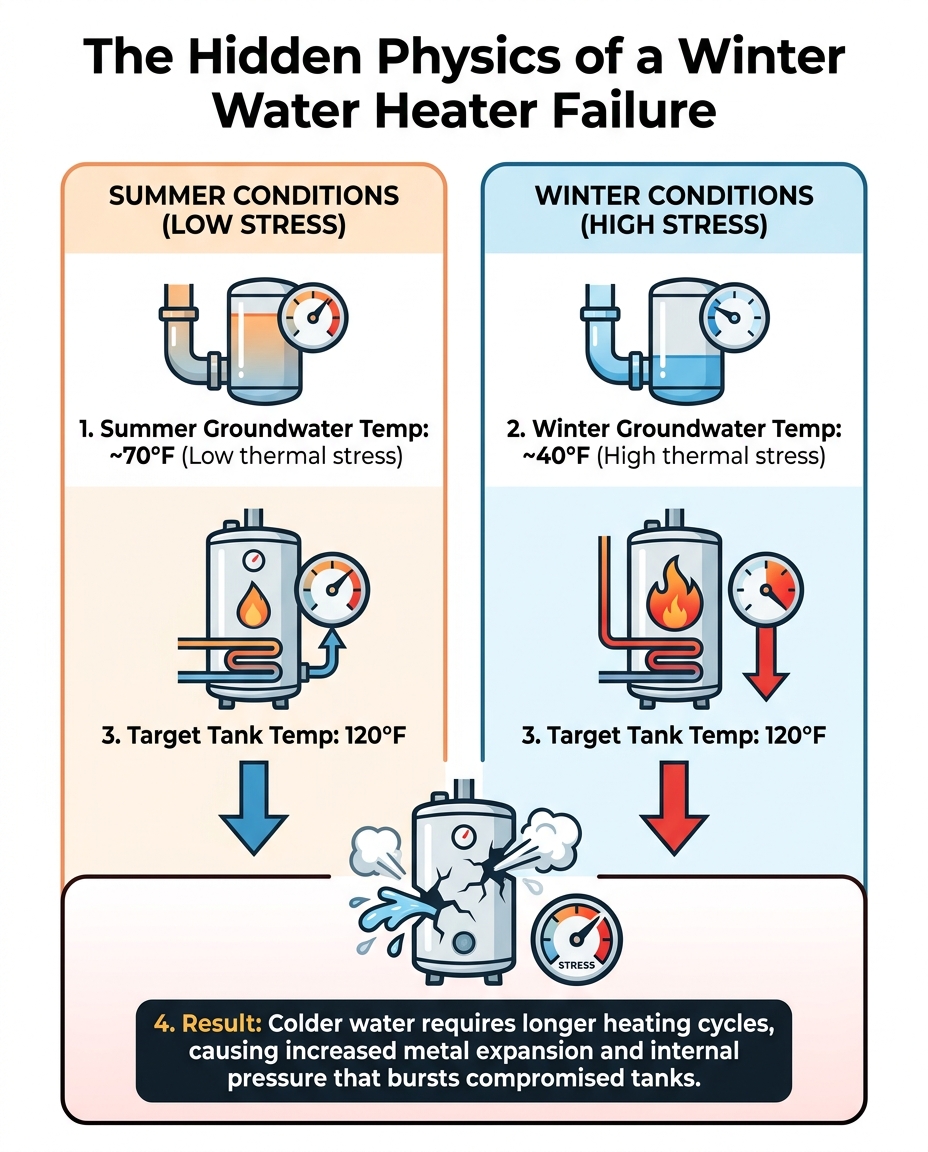
The Baseline Mechanics: To understand why a late-summer leak is so concerning, we have to look closely at the physics of thermal stress and how your system actually operates. Standard water heaters have one primary job: they must raise incoming municipal water to a safe, comfortable temperature of approximately 120 degrees Fahrenheit. Right now, that job is relatively easy. The water traveling through underground municipal pipes is still absorbing the residual heat of the summer sun. However, you must prepare for the impending drop in incoming municipal groundwater temperature. In the Des Moines area, municipal water sources cool significantly as we move from summer into the deep winter months. The ground freezes, chilling the pipes and the water inside them to near-freezing temperatures.
The Impact of Seasonal Shifts: As the incoming water temperature plummets, the temperature gap between the cold water entering the tank and the 120-degree target widens drastically. To bridge this massive temperature gap, your water heater's burner or heating elements must run for much longer cycles. This extended run time requires significantly more energy and forces the tank to endure prolonged periods of intense heat. If you are eventually going to need water heater repair and replacement, understanding this seasonal thermal load is crucial to timing your service appropriately.
The Hidden Stress of Thermal Expansion
When water heats up, it naturally expands. This basic principle of physics creates immense internal pressure against the steel walls of the water heater tank. A structurally sound, healthy water heater handles this pressure easily because the heavy-duty steel and the internal protective glass lining are fully intact. The tank is designed to flex slightly under pressure.
However, a corroded or leaking tank has lost its structural integrity and cannot withstand this continuous fluctuation. The continuous heating of colder winter water causes the metal tank to expand and contract much more drastically than it does in the summer. This heightened, repetitive pressure turns a minor late-summer weak point into a high-risk blowout zone. The metal is already fatigued where the leak is occurring, and the added stress of thermal expansion will actively push against that compromised area until it completely gives way.

The Risks of Patching a Compromised Water Heater
Identifying the Source: Not all water heater leaks are created equal, and understanding the difference is key to making a smart decision. A leak stemming from a loose water line connection, a faulty temperature and pressure relief (T&P) valve, or a worn-out plastic drain valve is often a straightforward, fixable issue. These components can be tightened or swapped out without compromising the main body of the unit. However, if moisture is seeping directly from the metal tank casing itself, you are dealing with a severe structural failure.
The Illusion of a Patch: Patching a cracked or rusted tank is almost always a temporary, band-aid solution that ignores the root cause of the problem. Water heaters rust from the inside out. Inside the steel tank is a thin glass lining designed to protect the metal from the corrosive effects of water. Over years of thermal expansion and contraction, this glass lining develops microscopic cracks. Water slowly seeps through these cracks and begins eating away at the steel outer shell. By the time you see a puddle on your floor during the late August / back-to-school transition, the internal damage is already extensive.
Vulnerability Under Pressure: Applying an external epoxy patch or sealant over a rusted tank is highly dangerous. It does absolutely nothing to stop the internal rusting process, and it cannot hold back the 150 PSI of expanding hot water that the tank will generate during the winter. Once the winter workload hits and the tank begins running longer heating cycles, that patch will face extreme vulnerability. The pressure will easily blow past the temporary fix, resulting in a flooded utility room. If you are weighing your options, reviewing a comprehensive water heater installation guide can help you understand what a proper, safe replacement entails.
Benefits of Replacing Your Unit Before the Cold Sets In
Taking proactive steps to replace a failing unit before the seasonal shift offers significant advantages for your home's safety and your daily comfort. Waiting for a catastrophic failure is a gamble you do not need to take.
1. Guaranteed Reliability and Peace of Mind: The most immediate benefit is the security of entering the high-demand season with a structurally sound, fully warrantied unit. You will not have to worry about waking up to a flooded basement on a freezing January morning. A new unit guarantees that you will have consistent, reliable hot water when you need it most.
2. Enhanced Energy Efficiency: Modern water heaters are vastly more efficient than models built even a decade ago. Discussing the energy efficiency gains is vital, as newer units do not have to overwork to heat freezing incoming water. They feature thicker, higher-quality foam insulation that drastically reduces standby heat loss, saving energy even when the impending drop in incoming municipal groundwater temperature occurs.
3. Better Handling of Temperature Fluctuations: Today's modern units are built with advanced, flexible materials and superior glass linings that are specifically designed to handle drastic seasonal temperature fluctuations much better than older, fatigued tanks. They manage thermal expansion with far less stress on the outer steel jacket.
4. Comprehensive Winter Preparation: Frame the replacement as a proactive step in your overall winter home preparation. Just as you check your weatherstripping, clean your gutters, and service your furnace, upgrading a failing water heater secures your home's infrastructure. If you are also exploring home heating solutions, upgrading your water heater at the same time ensures all major mechanical systems are fully prepared for the cold.
Side-by-Side Comparison: Repairing vs. Replacing Your Water Heater
When weighing the short-term convenience of a patch against the long-term implications of a replacement, a direct comparison helps clarify the best path forward before the late August / back-to-school transition ends. Review the table below to see how these two options stack up against the demands of the upcoming season.
• Immediate Resolution Time — Applying a Temporary Patch: Fast application, but requires frequent monitoring for failure. — Full Unit Replacement: Takes a few hours for professional installation, but resolves the issue permanently.
• Long-Term Reliability — Applying a Temporary Patch: Extremely low. Patches fail quickly under winter thermal loads. — Full Unit Replacement: Extremely high. Backed by a fresh manufacturer warranty.
• Risk of Catastrophic Failure — Applying a Temporary Patch: High risk of the tank bursting as internal pressure increases. — Full Unit Replacement: Virtually zero risk of bursting due to intact structural integrity.
• Energy Consumption Impact — Applying a Temporary Patch: Older unit will continue to waste energy fighting dropping temperatures. — Full Unit Replacement: Modern insulation and efficient burners significantly reduce energy waste.
The takeaway from the data: While a patch might seem like a quick way to cross a chore off your list, it leaves your home vulnerable to a massive water damage event. A replacement requires a larger initial commitment of time, but it completely removes the risk of a winter breakdown and immediately improves your home's energy profile.
Honest Assessments for Local Homeowners
The Importance of Professional Diagnosis: Determining whether a leak is a simple, fixable valve issue or a fatal tank crack requires professional diagnosis. A trained eye knows exactly where to look for hidden corrosion, how to test the T&P valve safely, and how to evaluate the condition of the sacrificial anode rod. You should never guess when it comes to a pressurized vessel holding dozens of gallons of scalding water.
Building Trust Through Transparency: You need a local team that understands regional groundwater challenges and provides transparent, pressure-free advice. One local homeowner has relied on routine maintenance for over 10 years, noting that technicians consistently respond quickly to minor emergencies, keeping their heating and cooling systems well-maintained and running smoothly. This type of long-term relationship is built on trust, consistency, and honest evaluations that prioritize the customer's best interests.
Our Commitment to Your Safety: Midwest Comfort Heating & Cooling provides 24/7 emergency response and honest, pressure-free assessments on whether a repair is actually safe. We prioritize your long-term safety over a quick, temporary fix that puts your property at risk. Knowing the impending drop in incoming municipal groundwater temperature will severely stress your system, we give you the unvarnished facts so you can make an informed, confident choice. If you live within our Des Moines service areas, you have access to responsive, dedicated support for urgent system issues that simply cannot wait.
Frequently Asked Questions About Water Heater Leaks
Can a cracked water heater tank be patched?
The short answer is no, a cracked water heater tank cannot be safely or permanently patched. True cracks in the metal casing are usually the result of severe internal corrosion that has eaten entirely through the steel wall. Applying an exterior epoxy or sealant only covers the exit hole; it does not stop the internal rusting, nor can it hold back the immense pressure of expanding hot water. A patched tank is a major flood hazard waiting to happen.
Why do water heaters fail in the winter?
Water heaters fail more frequently in the winter because the incoming municipal groundwater is significantly colder. To raise this near-freezing water to a safe 120 degrees, the unit is forced to run much longer heating cycles. This continuous, intense heating maximizes thermal expansion, causing the metal tank to stretch and contract repeatedly. This constant movement severely stresses existing weak points, rust spots, and micro-cracks until the metal finally gives way.
Is a leaking water heater dangerous?
Yes, a leaking water heater poses several significant dangers to your home and family. Beyond the obvious risk of severe flooding and structural water damage, a leak can create serious electrical hazards if water reaches the wiring of an electric unit or the surrounding outlets. Furthermore, if the leak is caused by a failing pressure relief valve rather than a tank crack, the internal pressure can build to dangerous levels, risking a catastrophic tank failure.
How can I tell if the leak is from the tank or a valve?
Identifying the source of the leak requires a careful visual inspection. If you see water dripping from the brass or plastic valves on the top or side of the unit, or pooling directly beneath the drain valve at the bottom, it is likely a fixable component issue. However, if you see moisture seeping directly from the metal casing, rust trails running down the sides, or water bubbling up from under the outer jacket, the leak is coming from the tank itself, which indicates structural failure.
Will a leaking water heater explode?
Actual explosions are extremely rare because modern water heaters are equipped with a Temperature and Pressure (T&P) relief valve designed to safely vent excess pressure. However, if that safety valve fails and the tank is already structurally compromised by rust, the tank is highly likely to burst. While not a fiery explosion, a bursting tank will forcefully release dozens of gallons of scalding water into your home in a matter of seconds, causing devastating damage.
Make Your Decision Before the Fall Chill Arrives
A late summer leak is a clear, undeniable warning sign that shouldn't be ignored as the seasons change. The mild temperatures of the late August / back-to-school transition provide a brief, valuable window of opportunity to address the problem calmly, without the panic and premium costs of a mid-winter emergency breakdown. Ignoring a small puddle now only guarantees a much larger, more destructive puddle later.
A professional evaluation will clarify whether a simple, inexpensive repair is viable or if a full unit replacement is necessary to protect your home. Schedule an honest, pressure-free assessment today to get a clear understanding of your tank's health. Making a safe, long-term decision now will give you total peace of mind, ensuring your home remains comfortable and secure long before the fall chill officially arrives.
Customer Testimonials
Service Areas
