



What Your AC Condensate Puddle is Trying to Tell You About Your Drain Line
Is That AC Puddle Normal or a Sign of Trouble?
Is that puddle forming around your indoor air conditioning unit just normal sweating, or the start of a major plumbing nightmare? If you are standing in a damp basement wondering what your AC condensate puddle is trying to tell you about your drain line, you are certainly not alone. At Midwest Comfort Heating & Cooling, our team fields calls exactly like this from Des Moines homeowners almost every single day during late summer. Discovering an unexpected pool of water near your indoor AC unit raises immediate alarms for homeowners, especially during August high humidity when systems are working around the clock.
The critical decision point you face right now is determining whether that moisture is a harmless byproduct of the cooling process or a glaring red flag indicating a clogged drain line. Understanding the difference between a few drops of condensation and a growing backup can save your lower level from significant water damage. Securing professional HVAC services is the safest and most reliable way to diagnose the exact cause of the moisture. Prompt air conditioning repair and service prevents minor leaks from escalating into major indoor floods.
How Your Air Conditioner Manages Moisture
To understand why water is pooling on your floor, it helps to understand exactly how your system handles humidity. Air conditioners do much more than simply pump cold air into your living spaces; they cool your home by simultaneously removing heat and extracting heavy humidity from the indoor air. When the system operates efficiently, this moisture is managed completely invisibly.
The Massive Volume of Condensation
Most homeowners don't realize just how much water their cooling system pulls from the air. During periods of extreme heat, a standard residential central AC unit can produce between 5 and 20 gallons of condensation every single day. With Des Moines late-summer dew points frequently exceeding 70 degrees, the moisture extraction load on residential systems hits its absolute peak. Your system is essentially acting as a whole-home dehumidifier, pulling gallons of water out of the muggy air to make your indoor environment comfortable.
The Role of the Evaporator Coil
The moisture extraction happens at the evaporator coil, located inside your indoor unit. Warm, humid indoor air blows over the freezing cold metal coils. As the air cools rapidly, it can no longer hold as much moisture. That water vapor condenses into liquid droplets on the surface of the coil, much like a cold glass of water sweating on a humid afternoon. These droplets constantly drip down off the coil while the system runs.
The Primary Condensate Drain System
Once the water drips off the evaporator coil, it lands in a designated collection area called the condensate drip pan. From there, the primary condensate drain line—usually a white PVC pipe—safely routes this high volume of water away from the indoor unit and out of your home. Depending on your home's layout, it might drain into a floor drain, a utility sink, or be pumped directly outside. As long as this pathway remains clear, the gallons of water exit your home without you ever noticing.
Signs Your AC Condensate Drain Line is Clogged
Knowing exactly what to look for can help you catch a backup before it ruins your flooring. While a tiny amount of moisture can sometimes be normal, several distinct visual and functional cues point directly to a clogged drain line.
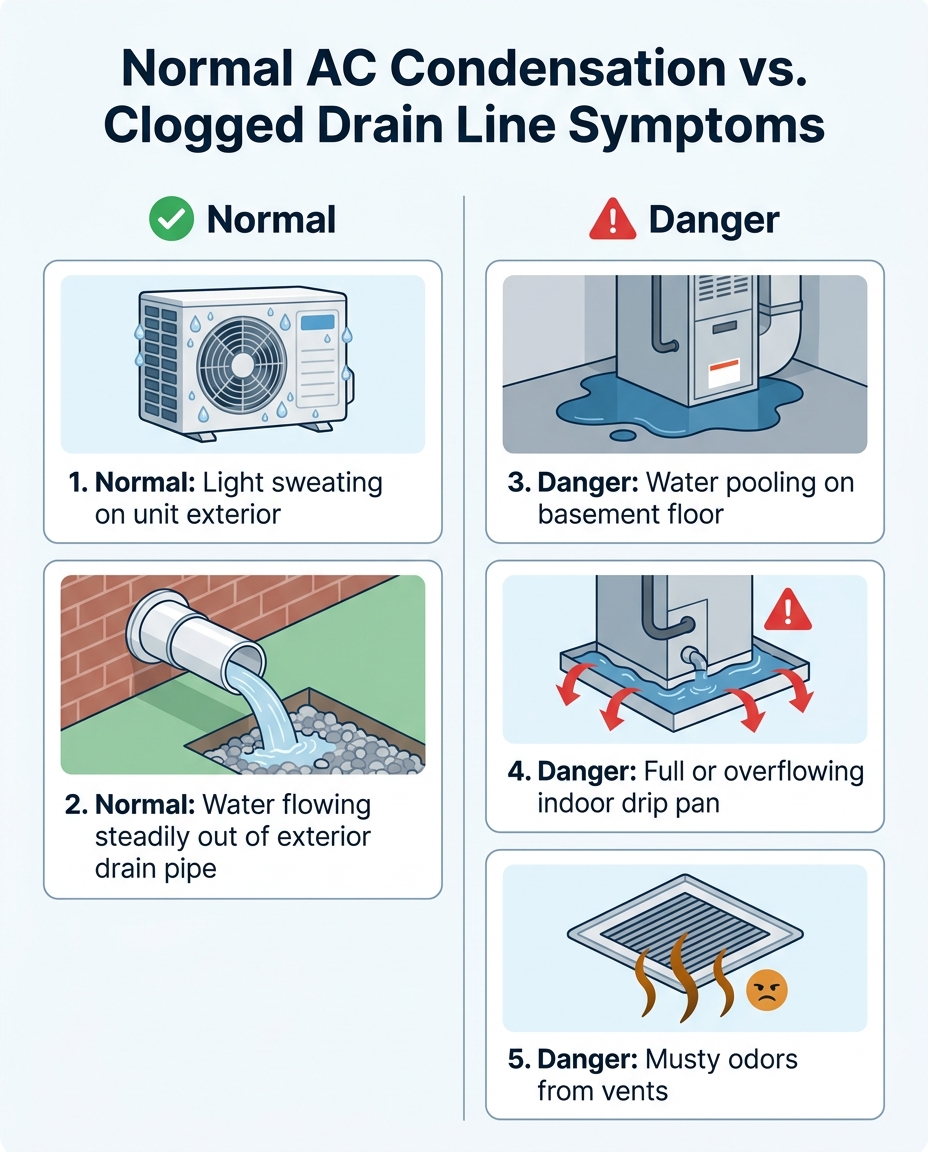
• Water pooling on the floor: Small amounts of light moisture or "sweating" on the unit's exterior metal cabinet can be normal in highly humid environments, but actual water pooling on the floor indicates a physical blockage forcing water out of the system.
• A full or overflowing drip pan: If you look at the shallow pan sitting beneath your indoor unit and see standing water right at the brim, this is a primary indicator that the drain line is restricted and cannot carry the water away fast enough.
• Musty, moldy odors: Unpleasant smells emanating from your supply vents or hovering near the basement unit strongly signal stagnant water trapped inside the drain line or pan, which has begun to grow biological contaminants.
• Unexpected system shutdowns: Modern air conditioners are equipped with a safety float switch. If water levels in the drip pan rise dangerously high, this switch activates and completely shuts down the system to prevent an overflow, leaving you with a blank thermostat and no cooling.
• Gurgling sounds: A bubbling or gurgling noise coming from the indoor unit often means water is struggling to push past a partial blockage in the PVC pipe.
• Unit Exterior — Normal Condensation: Light condensation or "sweat" on metal — Clogged Drain Line: Heavy dripping or water running down sides
• Floor Area — Normal Condensation: Completely dry — Clogged Drain Line: Noticeable puddle or growing pool of water
• Drip Pan — Normal Condensation: Damp but actively draining — Clogged Drain Line: Full of stagnant water or actively overflowing
• System Operation — Normal Condensation: Running continuously to cool home — Clogged Drain Line: Suddenly shuts down or refuses to turn on

Why Drain Line Clogs Peak in Late Summer
It is no coincidence that condensate puddles tend to appear just as the summer is winding down. The environment inside your drain line is the perfect breeding ground for blockages, and the timing of these clogs follows a very predictable pattern tied directly to system usage and weather.
The Perfect Environment for Sludge
Algae, mold, and biological sludge thrive in the dark, damp, and cool environment of the condensate drain line. As the air conditioner pulls humidity out of the air, it also pulls airborne dust, pet dander, and microscopic debris. This debris washes off the evaporator coil and flows down into the drip pan and PVC pipe. When this organic matter mixes with constant moisture, it creates a thick, jelly-like substance often referred to as "white slime" or algae sludge. Over weeks and months, this sludge slowly grows, clinging to the inside walls of the pipe and gradually restricting its diameter.
The August Tipping Point
By the time August arrives and the back-to-school transition begins, your system has endured a full season of heavy, continuous operation. The dust and biological growth have been accumulating since May. This cumulative wear brings blockages to a critical tipping point, and our technicians consistently see a massive spike in clogged drain line calls during this specific window. The intense moisture load of August late-summer high humidity requires the system to drain at maximum capacity. When a pipe that is already 80% blocked by sludge is suddenly forced to handle 15 gallons of water in a single day, the restricted line simply cannot keep up. The water backs up into the pan, trips the float switch, or spills over the sides onto your floor.
The Hidden Threat to Des Moines Finished Basements
In our years of servicing HVAC systems across Des Moines, we've seen firsthand that ignoring a small puddle near your HVAC unit is a massive gamble. A clogged line doesn't just stop your cooling cycle; it presents a severe threat to the structural integrity of your home's lower level.
Immediate Structural Damage
When the drain line is completely blocked and the safety switch fails or isn't present, the system can quickly dump gallons of water indoors. Des Moines finished basements are particularly vulnerable to this type of localized flooding. Water damage to baseboards, drywall, laminate flooring, and expensive carpets can happen in a matter of hours. The water seeps under floorboards and wicks up into the drywall, compromising the material and requiring expensive tear-outs and replacements if not caught immediately.
Secondary Health and Safety Risks
If the water is left untreated or goes unnoticed in a utility closet for several days, the rapid spread of mold poses secondary health and structural risks. Mold colonies can establish themselves in wet drywall or carpet padding within 24 to 48 hours. Once mold takes hold in a finished basement, it can circulate spores through your HVAC system, degrading indoor air quality and creating respiratory irritants for your family. Addressing the puddle immediately is absolutely essential for protecting the significant financial investment you have made in your home's lower level.
Actionable Steps When You Spot a Growing Puddle
If you walk downstairs and find water spreading across the floor near your furnace and AC setup, taking the right immediate actions can mitigate damage while you wait for expert help.
1. Turn off the AC system immediately: Go to your thermostat and switch the system to "Off." This is the most important step. Shutting down the system immediately halts the condensation production, stopping the source of the leak so the puddle stops growing.
2. Soak up the visible puddle: Use heavy towels or a wet/dry vacuum to remove the standing water from your floor. This prevents immediate damage to your flooring and allows you to assess the area clearly.
3. Do not attempt DIY main line clearing: It is highly advised not to attempt to clear the main drain line yourself. Improper techniques, such as using high-pressure air or harsh chemicals, can permanently damage the PVC piping, crack the delicate drip pan, or simply push the clog deeper into an inaccessible part of the plumbing.
4. Call for professional intervention: You need to schedule an emergency inspection with a licensed professional to safely and completely clear the line.
Our team at Midwest Comfort Heating & Cooling has designed our rapid response times and thorough inspection processes specifically to catch these clogs before costly basement water damage occurs. We routinely see patterns where prompt action saves a finished basement. For instance, just recently, one local homeowner reached out during a late-summer heatwave when their air conditioner stopped working entirely due to a backup. A technician was at the house in under two hours and had the system diagnosed, the line cleared, and the AC running properly again in less than an hour.
Preventing Future Backups with End-of-Season Care
Once the immediate emergency is resolved, the focus must shift to prevention. As the cooling season winds down, proactive care is the only way to ensure you don't face the exact same puddle next summer.
What Professional Clearing Includes
Professional clearing and treatment of the drain line ensures the system finishes the current season safely. A licensed technician uses specialized vacuum equipment designed specifically for HVAC lines to completely extract the sludge, rather than just poking a hole through it. They will also treat the drip pan and line with specialized algaecide tablets that inhibit future biological growth, keeping the pipe clear of slime for months.
The Value of Proactive Maintenance
We consistently remind our customers that investing in routine AC maintenance helps our technicians catch biological growth before it solidifies into a complete blockage. During a tune-up, regular professional inspections verify that the condensate pump, primary drain line, and safety float switches are operating correctly. By responding quickly to minor emergencies and performing thorough maintenance, technicians help ensure your heating and cooling equipment is well-maintained and ready for the seasons ahead. Between professional visits, homeowners can review AC troubleshooting tips to better monitor system health, check air filters, and keep an eye out for early warning signs of restricted airflow.
Frequently Asked Questions About AC Condensation
Is it normal for my AC to leak water inside?
No, it is never normal for your air conditioner to leak water onto your indoor floor. While the system naturally produces gallons of condensation every day, this water is supposed to be safely contained within the drip pan and routed outside through the drain line. If water is escaping the unit and pooling on the floor, it indicates a failure in the drainage system, usually a clogged line or a cracked pan, requiring professional attention.
How do I know if my AC drain line is clogged?
The most obvious sign of a clogged drain line is a drip pan that is completely full of standing water or actively overflowing. You may also notice water pooling around the base of the indoor unit, musty odors coming from your vents, or hear a gurgling sound near the equipment. Additionally, if your thermostat goes blank and the system refuses to turn on, a safety switch may have tripped due to a backed-up drain line.
What happens if an AC drain line is left clogged?
If an AC drain line is left clogged, the water will continue to back up until it spills over the drip pan, potentially dumping gallons of water onto your floor. This leads to severe water damage to drywall, baseboards, and flooring, and creates an ideal environment for rapid mold and mildew growth. Furthermore, the safety switches will keep the system shut down, leaving your home without air conditioning during the hottest parts of the year.
Can I use household cleaners to clear my condensate drain line?
You should never pour harsh household cleaners, bleach, or chemical drain openers down your condensate line. These caustic chemicals can degrade the PVC piping, damage the plastic drip pan, and emit dangerous fumes into your home's ductwork. Clearing a main line safely requires specialized suction equipment and HVAC-approved treatments applied by a licensed technician to fully remove the blockage without harming the system.
Why is my AC leaking water in August specifically?
August brings a combination of high humidity and cumulative system wear. By late summer, your AC has been running heavily for months, allowing dust and biological slime to slowly build up inside the dark, damp drain line. When the extreme humidity of August hits, the system produces maximum condensation, pushing a partially restricted pipe past its limit and causing it to overflow.
Protect Your Home from Condensate Overflows
Don't wait for a small puddle to become a basement flood. A little bit of water on the floor today can turn into a major structural nightmare tomorrow if the underlying blockage isn't properly addressed. Professional diagnostics ensure your system is draining safely and efficiently, protecting your property from unseen leaks. Reach out to our local team for expert help to keep your home dry, comfortable, and protected through the rest of the cooling season.
Customer Testimonials
Service Areas
