



Why We Recommend Scheduling Fall Furnace Tune-Ups While It Is Still 80 Degrees Outside
The 80-Degree Illusion: Why We Recommend Scheduling Fall Furnace Tune-Ups While It Is Still 80 Degrees Outside
August is here, the air conditioner is running nonstop, and you are probably wondering why we recommend scheduling fall furnace tune-ups while it is still 80 degrees outside. It is a completely natural psychological hurdle. When you are trying to stay cool during the heavy August late-summer heat, the absolute last thing on your mind is your home's heating system. However, ignoring your furnace until the weather turns can set you up for a highly stressful situation.
A typical pattern we see is a homeowner discovering an ignition failure on the very first freezing night of the year. By that time, local HVAC schedules are entirely booked, and what could have been a simple, proactive adjustment becomes a miserable night wrapped in blankets. Framing your early scheduling as a smart, strategic decision rather than an unnecessary early task gives you the peace of mind that comes with knowing your system is fully prepared for abrupt weather changes.
If you want to ensure your home is ready for the changing seasons, exploring professional heating services now is the smartest move you can make.
The Ultimate Logistical Hack: Skipping the September HVAC Rush
Understanding the seasonal rhythms of the heating and cooling industry can save you an enormous amount of frustration. Booking your heating maintenance before the peak season begins is the ultimate logistical hack. Once the temperatures drop, the industry experiences a massive surge in service requests, completely altering how quickly a technician can reach your home.
Navigating Peak Season Wait Times
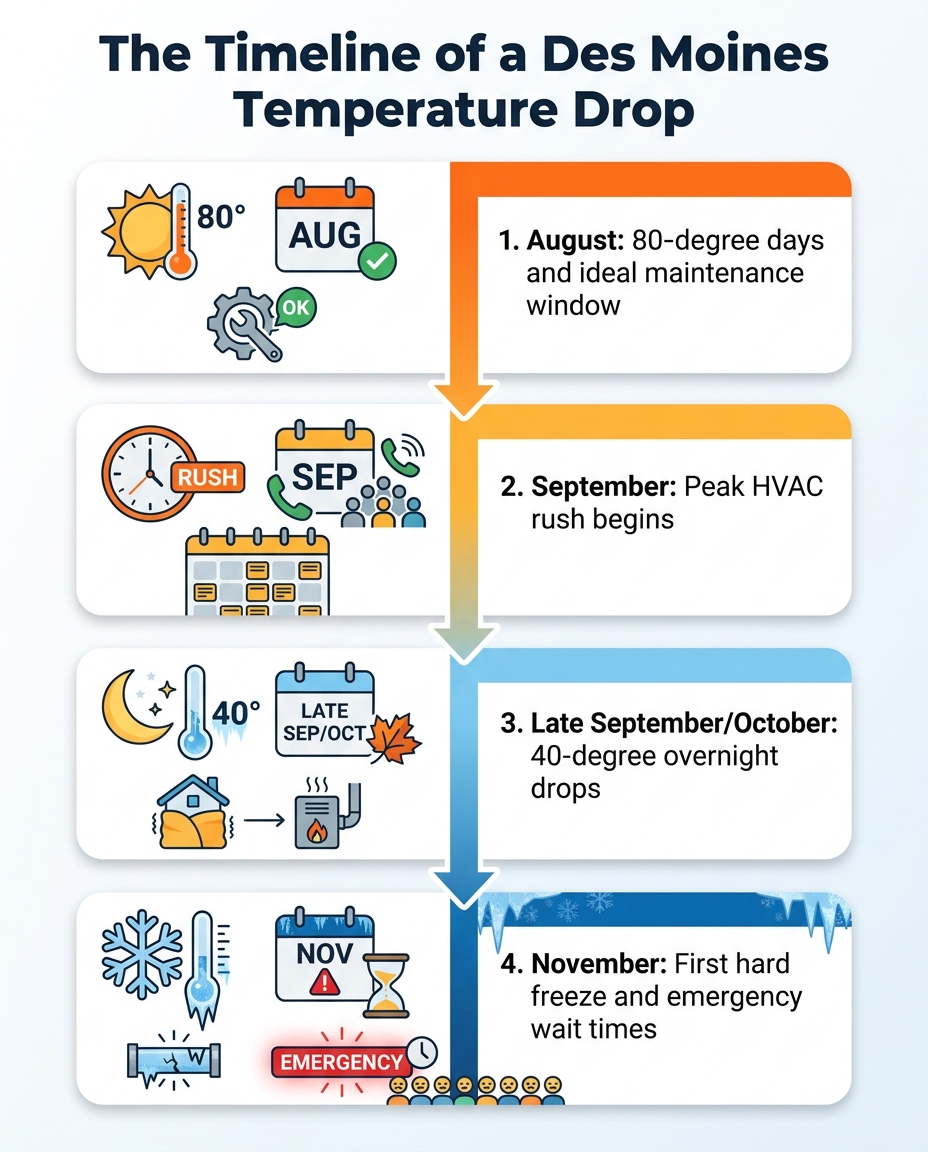
HVAC companies experience their absolute highest volume of emergency calls during the first true cold snap of the season. This phenomenon, often called the "first freeze surge," means call volumes skyrocket practically overnight. When hundreds of local residents suddenly realize their heating systems are malfunctioning, dispatch boards fill up instantly.
During this peak season, routine maintenance appointments inevitably get pushed behind emergency no-heat calls. Waiting until late September or October often results in wait times stretching out for weeks just for a routine appointment. By scheduling your tune-up in August, you secure flexible scheduling while technicians still have open summer availability, allowing you to choose an appointment time that actually fits your busy life.
Securing Parts Before the Rush
Identifying a failing component early is crucial because it allows ample time to order replacement parts without the stress of expedited shipping or widespread backorders. Supply chains in the HVAC industry can tighten significantly once the national demand for furnace parts spikes in the fall.
One local homeowner experienced a complete furnace failure in early November when they urgently needed heat. While professional technicians were able to arrive by noon, diagnose the issue, retrieve the necessary part, and get the system running quickly, waiting for a breakdown during peak season carries heavy risks. If a specific motor or circuit board is backordered, you could be left without heat for days. Early scheduling avoids this precarious scenario entirely.
• Proactive August Scheduling — Technician Availability: High flexibility, pick your preferred day and time. — Parts Sourcing: Ample time to order and install any needed components. — Stress Level: Low. System is ready well before the cold arrives.
• Reactive October Scheduling — Technician Availability: Limited. Routine calls wait behind emergency breakdowns. — Parts Sourcing: High risk of seasonal backorders and shipping delays. — Stress Level: High. Risking cold nights while waiting for service.
To lock in your preferred time and ensure your equipment is ready, setting up an HVAC maintenance plan early is highly recommended.
Safety First: Exposing Hidden Furnace Dangers Early
Beyond convenience, there are critical safety reasons for inspecting your furnace before it begins running continuously. Heating equipment sits dormant for months, and firing it up for the first time without a proper inspection can expose your home to hidden dangers.
The Threat of Carbon Monoxide
Heating equipment is a leading cause of home safety issues, particularly concerning carbon monoxide leaks. Carbon monoxide is an invisible, odorless, and tasteless gas that can leak from compromised heating systems. Because you cannot see or smell it, it poses a severe threat to your household.
Pre-season safety checks verify proper venting and combustion before your house is sealed up tight for the winter. A licensed professional will test the exhaust systems to ensure all combustion gases are being safely routed outside your home. Discovering a safety hazard in August gives you plenty of time to address it safely, whereas finding it in November often means shutting down the system and leaving your family in the cold.
Heat Exchanger Integrity
The heat exchanger is the core component that separates the breathable air in your home from the toxic gases created during the combustion process. Over years of use, the constant metal expansion and contraction from heating and cooling cycles can cause microscopic cracks to form in this vital component.
A cracked heat exchanger that has sat dormant all summer is incredibly dangerous. Professional diagnostics utilize specialized cameras and combustion analysis tools to detect these microscopic cracks before they become a severe hazard. If you need an unexpected furnace replacement due to a failed heat exchanger, finding out in August gives you the luxury of time to review your options.
Additionally, dust, pet dander, and debris naturally build up on furnace components over the summer. When the system ignites for the first time, this debris burns off, creating alarming burning smells and minor fire hazards. A thorough cleaning removes this buildup, ensuring a safe, clean ignition even during sudden 40-degree overnight temperature drops.
Summer Diagnostics: Can You Actually Test a Furnace in August?
A very common question homeowners ask is whether a heating system can actually be tested accurately while the air conditioner is still running and the weather outside is hot. The short answer is yes. Professional technicians can thoroughly and accurately test heating components regardless of the outdoor temperatures.
What Technicians Look For
When a professional evaluates your heating system in the summer, they are not just looking at the temperature of the air coming out of the vents. They are rigorously testing the mechanical and electrical health of the unit. Modern diagnostic tools allow for precise readings of system health even in the August late-summer heat.
• Ignition systems: Verifying that the electronic ignition or pilot light engages smoothly without delay or small fuel build-ups.
• Flame sensors: Testing the sensor that proves a flame is present, ensuring the system will safely shut off the gas valve if the burners fail to ignite.
• Safety controls: Checking all limit switches and rollout switches to guarantee the furnace will automatically shut down if it overheats or if airflow is restricted.
• Electrical connections: Tightening wiring and testing the amperage of the blower motor to prevent electrical shorts.
The critical takeaway: These checks require specialized multimeters and a deep understanding of HVAC electrical systems. They must always be performed by a licensed professional, as handling high-voltage components and natural gas lines is never a safe DIY project.
Preparing Dual-Function Systems
If your home utilizes a system that handles both heating and cooling, evaluating the transition mechanisms is vital. Technicians must ensure that the reversing valves—which dictate whether the system is pulling heat out of your home or pushing heat into it—operate correctly and shift smoothly.
They will also verify the health of the blower motor. After a long, demanding season of pushing air conditioning through your ductwork, the motor needs to be inspected, cleaned, and tested to ensure it can handle the upcoming workload. If you are considering upgrading your equipment, exploring heat pump options during this late-summer window allows for a seamless installation before the freezing weather arrives.
Proactive Care: Redefining Seasonal Maintenance
Early maintenance is a core part of proactive home management. There is a stark contrast between the intense stress of reactive emergency repairs and the calm predictability of proactive maintenance. When you stay ahead of the weather, you remain in complete control of your home's comfort.
Efficiency and Performance
Clean components operate significantly more efficiently, reducing the overall strain on the system. When a furnace is bogged down by dirty burners or a clogged blower wheel, it has to run longer and work harder to reach the temperature set on your thermostat. Proper calibration ensures the system doesn't overwork during the first major temperature dip.
Another homeowner who relies on professional care for both their furnace and air conditioner noted that proactive, routine visits not only keep their units serviced proficiently but also provide valuable advice on energy efficiency. Getting this guidance before the heavy usage season begins allows you to implement smart thermostat schedules and airflow improvements that optimize performance.
At Midwest Comfort Heating & Cooling, our proactive approach to customer care is designed precisely for this reason—helping local families avoid the stressful fall rush and ensuring safety well before emergency services are ever needed. We view early maintenance not as a simple checklist, but as a commitment to your family's safety and the long-term lifespan of your equipment. By reducing wear and tear now, you extend the life of your investment.
Weathering the Transition: Preparing for Abrupt Climate Shifts
Grounding this logistical advice in our specific regional climate makes the urgency clear. The late-summer weather patterns in Des Moines are notoriously unpredictable. We frequently experience a unique climate dynamic where hot, humid days can abruptly transition into chilly autumn nights with very little warning.
It is entirely common in our region to have a balmy, 80-degree afternoon quickly turn into a freezing evening, catching homeowners completely off guard. These sudden, 40-degree overnight temperature drops put an immense strain on residential HVAC systems. Your equipment is forced to switch from heavy cooling to immediate, intense heating within a matter of hours.
If your heating components have not been tested and cleaned, this abrupt climate shift is exactly when parts fail. Early preparation is the only reliable way to ensure your comfort during these unpredictable transition weeks. When you know your system has been professionally vetted, you can comfortably switch from AC to heat the moment the sun goes down and the chill sets in.

Common Questions About Early Fall Heating Maintenance
When is the absolute best time to schedule a furnace tune-up?
The absolute best time to schedule your heating maintenance is in August or early September. Booking during this late-summer window allows you to skip the massive surge of service calls that occurs during the first cold snap. It guarantees you flexible scheduling, ensures any necessary parts can be ordered without delay, and provides peace of mind well before the freezing weather arrives.
Can a furnace actually be tested accurately during the summer heat?
Yes, professional HVAC technicians can accurately test a heating system regardless of the outdoor temperature. They utilize advanced diagnostic tools to check electrical connections, amperage draws, safety limit switches, and ignition sequences. These mechanical and safety evaluations do not rely on cold outdoor air to confirm that the system is operating safely and efficiently.
What happens if I wait until winter for my first furnace maintenance?
Waiting until winter drastically increases your risk of experiencing a breakdown when you need heat the most. By winter, technicians are overwhelmed with emergency no-heat calls, meaning routine maintenance gets pushed back, often resulting in wait times of a week or more. Furthermore, running an unchecked system can exacerbate minor wear and tear, leading to more extensive and stressful repairs.
Why does my furnace smell like it's burning when I first turn it on?
That burning smell is typically caused by dust, pet dander, and airborne debris that has settled on the furnace burners and heat exchanger over the summer months. When the system ignites for the first time, this debris burns off. While this is common, a professional pre-season cleaning removes this buildup, preventing the alarming odors and ensuring a cleaner, safer ignition.
How long does a typical early fall heating inspection take?
A thorough, professional heating inspection generally takes between 60 to 90 minutes. During this time, the technician will clean internal components, test all safety mechanisms, evaluate the heat exchanger for microscopic cracks, and calibrate the thermostat. This brief appointment in the summer saves you from hours of freezing temperatures and emergency service waits in the winter.
Secure Your Family's Comfort Before the First Frost Hits
Navigating the changing seasons doesn't have to be a stressful scramble. Early scheduling is the ultimate strategy for a smooth, stress-free transition into the colder months. By taking action now, you bypass the frustrating peak-season rush, avoid extended wait times, and guarantee that any necessary adjustments are made on your own terms.
More importantly, proactive care provides the ultimate peace of mind. Knowing that your heat exchanger is intact, your safety switches are functional, and your system is calibrated to handle sudden 40-degree overnight temperature drops means you can rest easy. Don't wait for the first freezing night to find out if your system works. This is exactly why we recommend scheduling fall furnace tune-ups while it is still 80 degrees outside—because true comfort is knowing your family is safe and warm, long before the first frost ever hits.
Customer Testimonials
Service Areas
